Bluebell Season
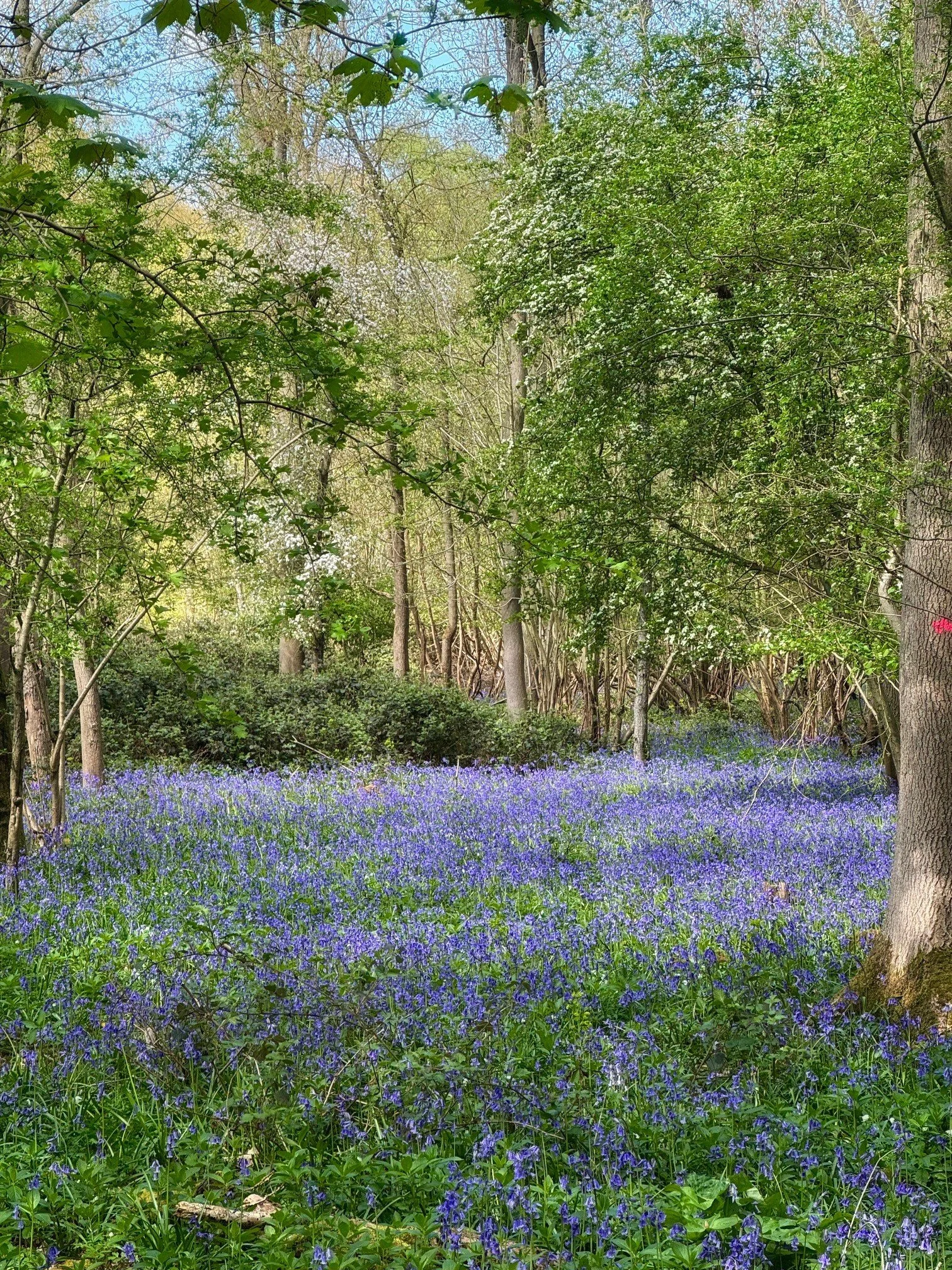
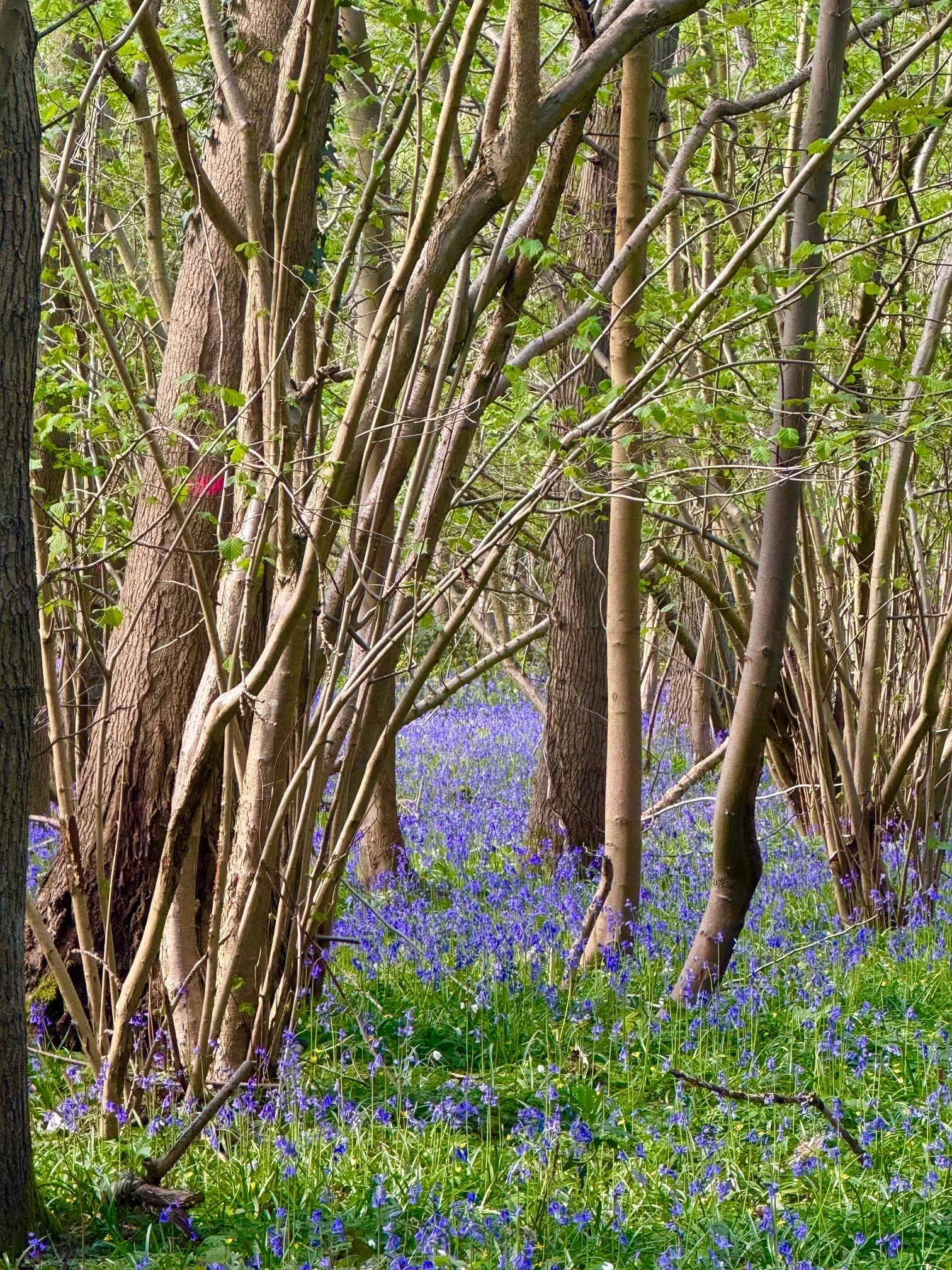
Yesterday, we explored an ancient woodland celebrated for its rich plant diversity, especially during this season when native bluebells blanket the ground. I have always cherished bluebells; their beauty has captivated me since childhood. Each spring, I feel compelled to visit them in bloom, experiencing a touch of anxiety at the thought of missing their fleeting display. This tradition made me reflect on what draws me so strongly to bluebells and what makes a woodland filled with them feel so extraordinary.
Bluebells are woven deeply into UK culture, symbolising both spring and ancient woodlands, and are often considered Britain's most beloved wildflowers. With about half of the world's bluebell population found here, protecting them is vital. Witnessing the woodland floor transform into a vivid sea of blue for a brief period feels enchanting, and it's this sense of magic that enchanted me as a child—and still does.
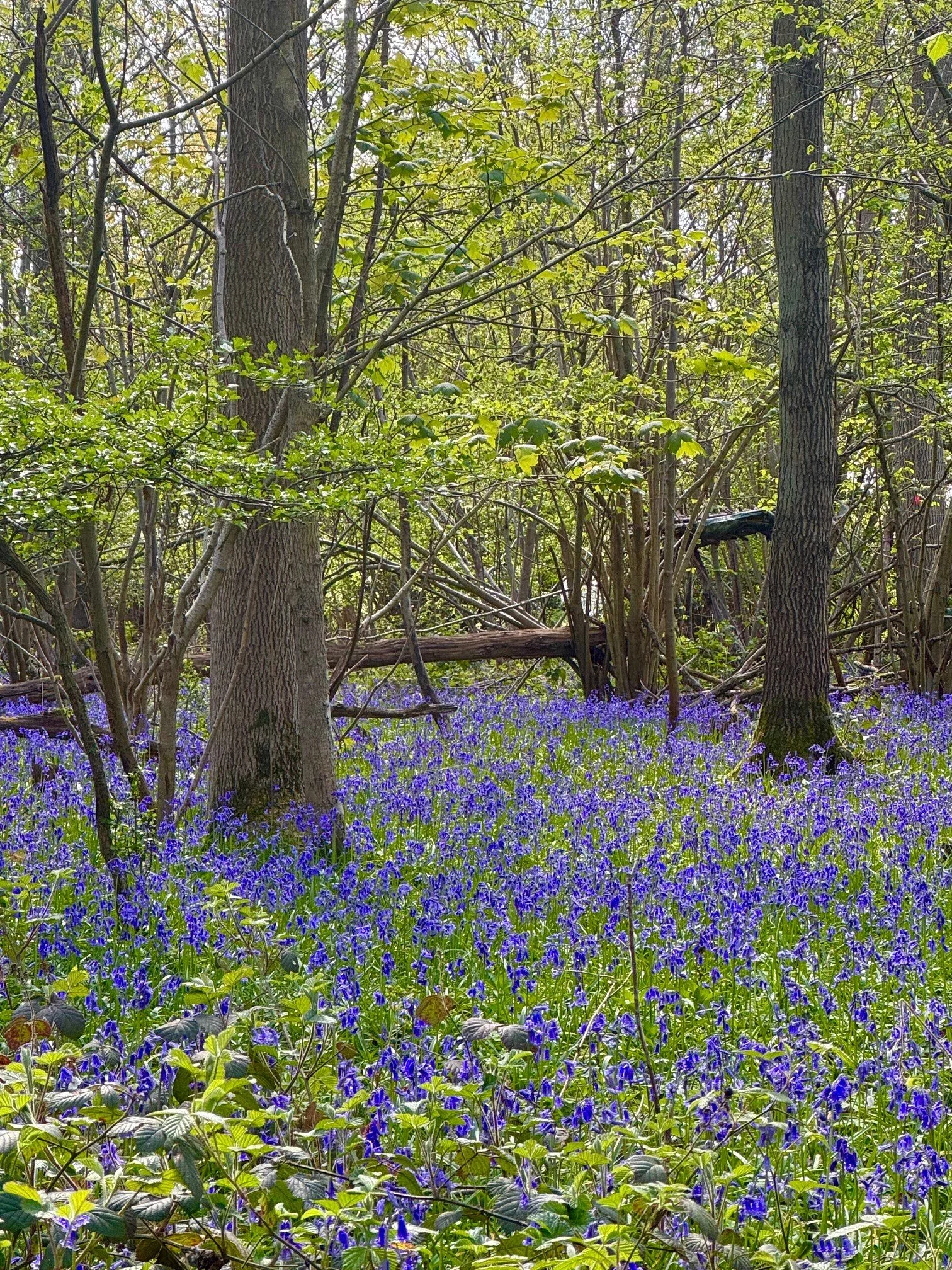
Fairy tales often describe woodlands as mystical spaces, where a thick carpet of flowers hints at wonder or discovery, sometimes even another realm. Bluebells have shaped our collective imagination since the days of the Celts, marking an ancient connection along with the stories they inspire. Folklore tells us bluebells belong to fairies; legend has it fairies hang spells from their petals and the flowers themselves serve as 'fairy bells', summoning magical gatherings. Humans cannot hear these bells—if they do, it's said they've entered the fairy world. Traditional superstition warns against bringing bluebells indoors, calling it bad luck—a belief that has helped protect this fragile plant. Bluebells are easily damaged, especially if trampled, and now they are not just protected by the fairies, but by UK law too. It is illegal to pick or dig up wild bluebells.
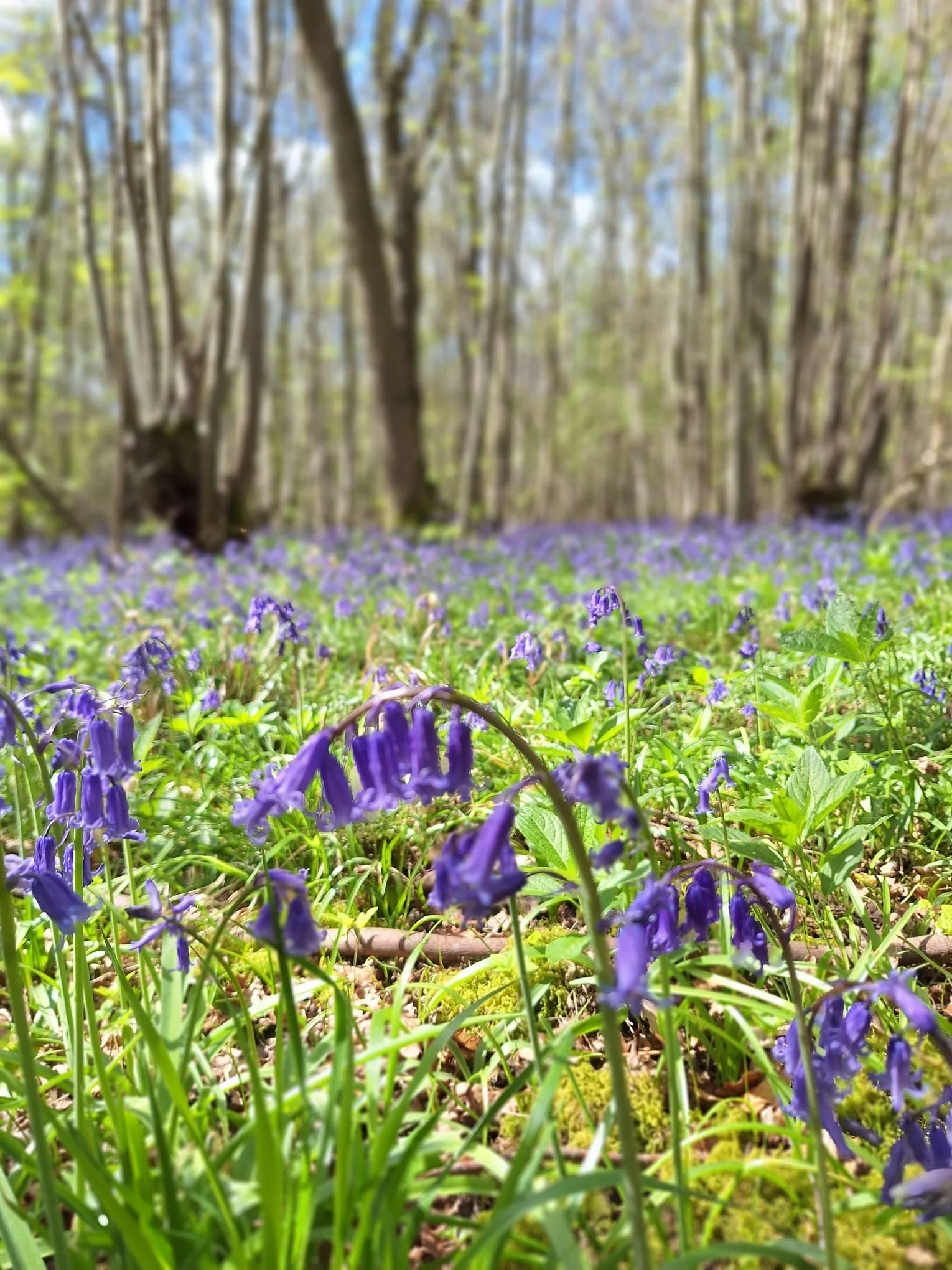
The woodland we visited was full of flowers including wood anemones and primroses and it felt like we had disappeared into another world. I think the way our eye perceives the bluebells on the woodland floor makes the experience elusive and ethereal. You spot a dense carpet of blue and head closer to see more but it is almost like chasing the end of a rainbow, you can never quite get there, with the sense of dense blue moving away as you get closer. The fragrance too is elusive. It creeps up on you and wraps around you and then is gone. The scent is such an important part of it for me, it is so beautiful and fleeting and I crave the experience of being surrounded by bluebell fragrance.
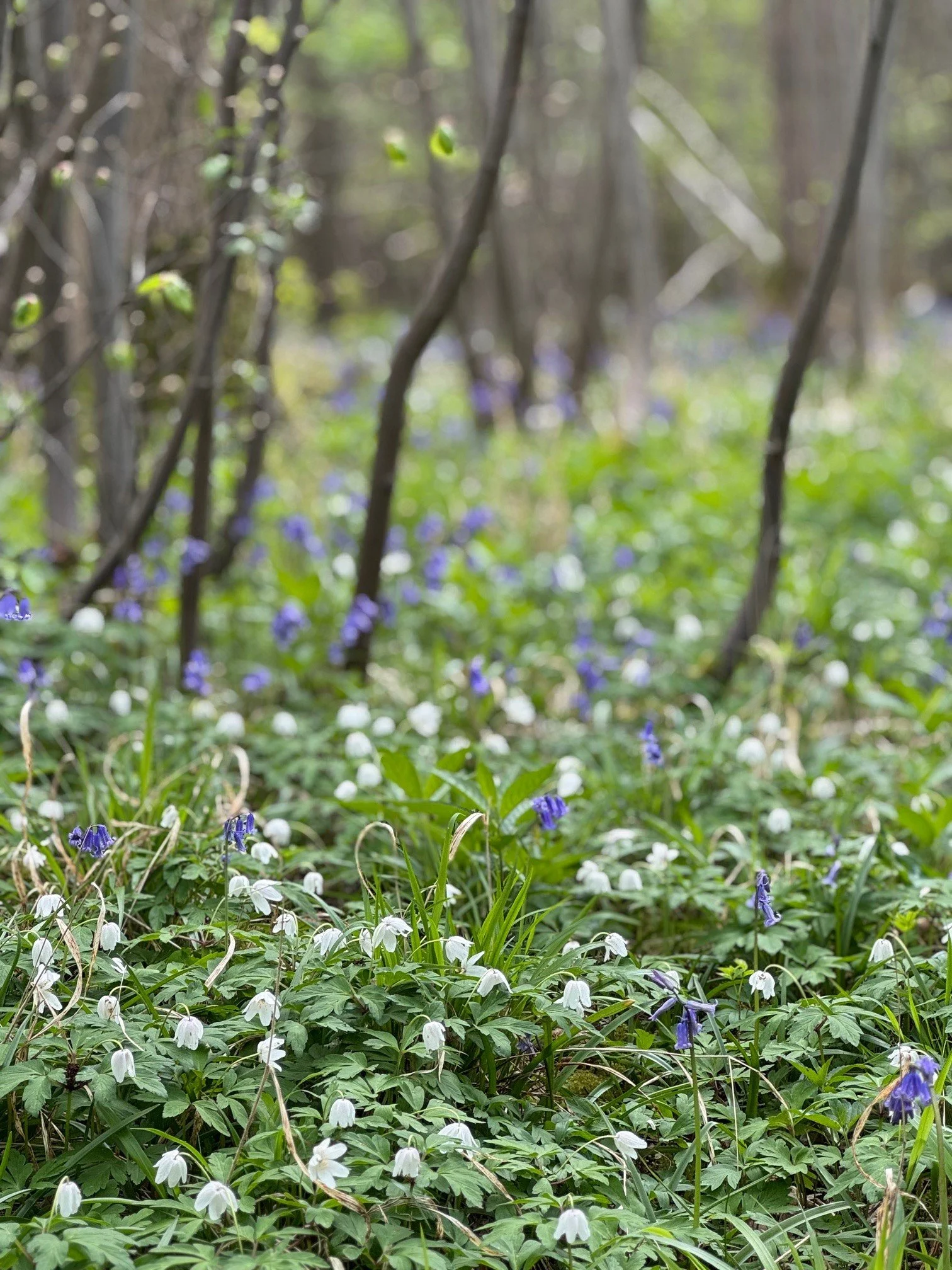
I think the fact that dense bluebell swathes are found in ancient woodland also makes the experience more magical. My childhood experience of bluebells was in Weald Country Park in Essex where I grew up. It features historically significant woodlands, including large oak and hornbeam pollards that are over 500 years old. My primary memory is of the feeling of being in the bluebell woods and of course we know that spending time in the woods has been proven to reduce blood pressure and cortisol (the stress hormone), elevate dopamine and serotonin, neurotransmitters that elevate mood, promote happiness and builds resilience against stress. Also, alpha brain wave activity increases leading to a state of relaxed alertness, allowing your mind to calm down without losing focus.
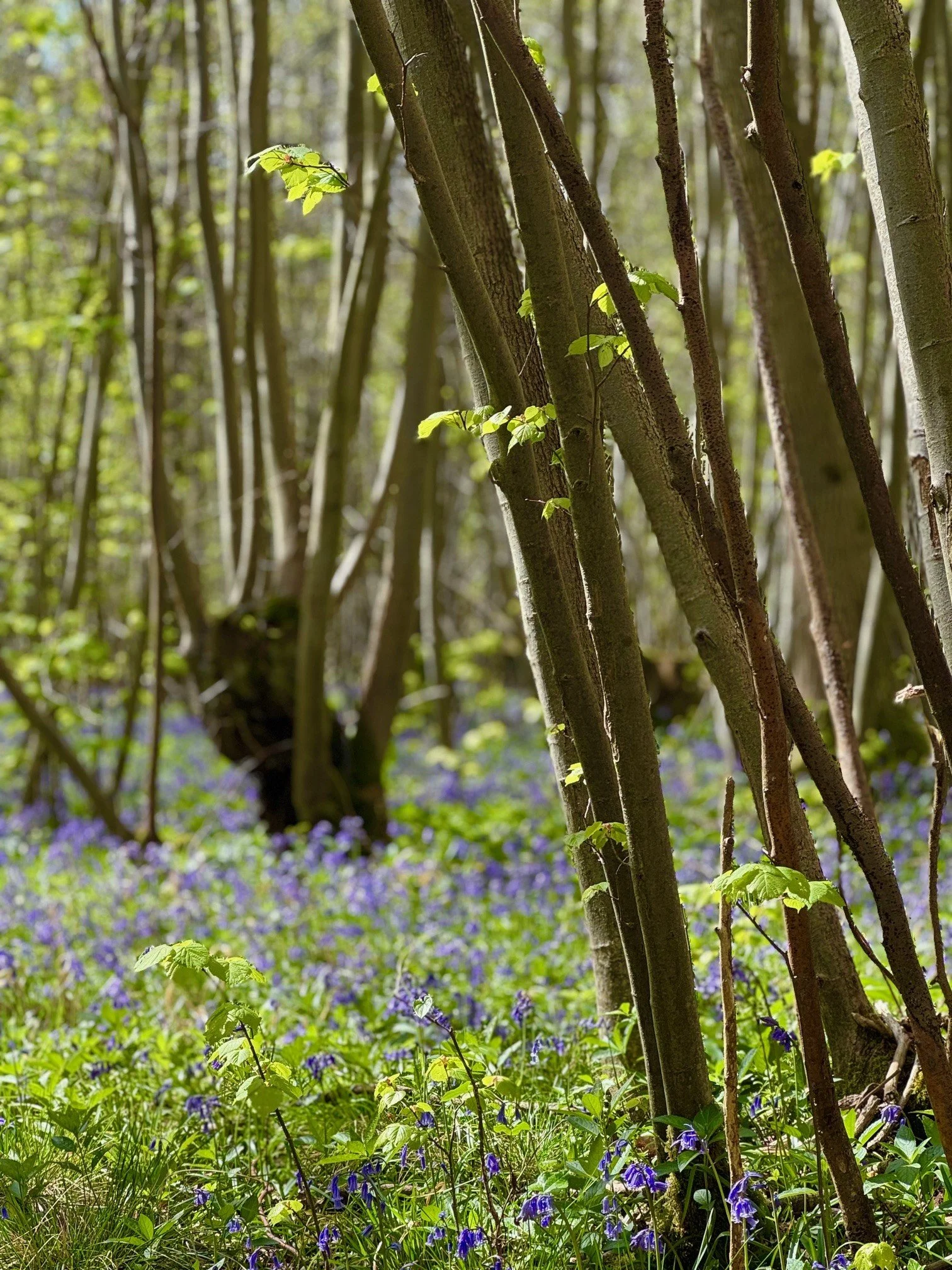
I still get the same feeling as I did as a child when I experience a bluebell wood and I think the changes in our physiology when we are in these spaces, allows us to be open to the energy of the place, the energy of the trees, the energy of the flowers. I think that bluebells are regarded as magical for a very good reason. They allow us to access a sense and awareness that modern humans have lost. They allow us to cross the bridge for a while and draw us in to a world that we normally can’t see or feel. I think they are like the poppy field from The Wonderful Wizard of Oz, which is often interpreted as a journey into a magical, yet dangerous, dream state. I think bluebell woods offer us a glimpse into another realm and once seen, like so many fairytales and magical stories leaves you bereft once the door is shut, until it opens again in this case next spring.